
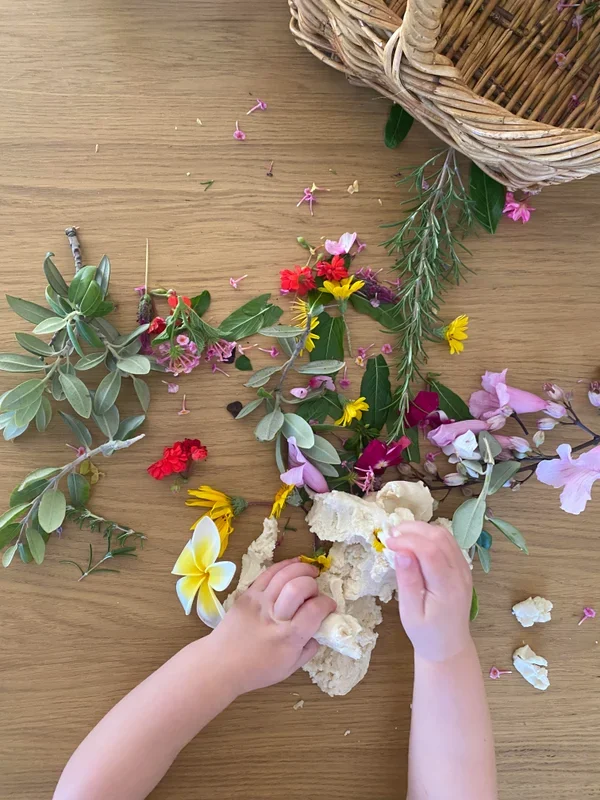
It’s squishy. It’s messy. It can become a snake, a birthday cake, a dinosaur or approximately 47 tiny balls scattered across your kitchen table.
And paediatric therapists love it!
While your child thinks they’re simply playing, their hands, brain and communication skills are getting a surprisingly good workout.
Playdough is one of those beautifully simple childhood activities that can support development across multiple areas at once, including many of the foundational skills children will draw on when they start school.
Those tiny hands are doing big work
Every time your child squishes, squeezes, pinches, pokes, pulls and rolls playdough, they’re using and strengthening the small muscles in their hands and fingers. Occupational therapists call this 'fine motor development'.
These movements are helping to build the foundational skills needed for:
holding and controlling a pencil
drawing and forming letters
using scissors
manipulating small objects
opening containers and lunchboxes
doing up buttons and zips
turning pages
managing everyday classroom tasks
Before children are expected to write, their hands need lots of opportunities to become strong, coordinated and capable.
Playdough provides exactly that, through something children naturally want to do. (Think of it as a little hand workout disguised as play).
'School readiness' is about much more than sitting still
When we hear the words 'school readiness', we often picture a child sitting at a table, holding a pencil, writing their name, knowing their letters and listening carefully to a teacher. But being ready for school is much bigger than that.
In Australia, the Australian Early Development Census (AEDC) considers children’s development across five domains: physical health and wellbeing, social competence, emotional maturity, language and cognitive skills, and communication skills and general knowledge.
In other words, preparing children for school isn’t simply about teaching them to sit, listen and write. It’s about supporting the whole child.
Can I communicate what I need?
Can I use my hands to manage everyday tasks?
Can I play alongside other children?
Can I have a go when something is challenging?
Can I think, imagine and problem solve?
Can I participate in the routines of my day?
Can I share my ideas with other people?
These foundations develop through children’s everyday experiences, and play is one of the most powerful places for that learning to happen.
Playdough is a language activity too
Playdough creates rich, natural opportunities for shared attention, conversation and language development. Think about how many different types of words can appear during just ten minutes of play.
Action words:
Squish. Roll. Push. Flatten. Cut. Stretch.
Describing words:
Soft. Sticky. Smooth. Round. Long. Tiny. Huge.
Position words:
Under. On top. Next to. Inside.
You can introduce naming words too:
Snake. Ball. Cake. Plate. Dinosaur. Eyes. Legs.
And plenty of early concepts naturally appear:
More. Same. Different. One. Two. First. Last.
The wonderful thing is that children aren’t learning these words in isolation. They can hear the word, see the action and experience what it means at the same time.
You don’t need to turn playdough into a lesson either. Instead of testing your child with lots of questions such as “What colour is that?” “What did you make?” “How many are there?”, try commenting on what they’re already doing.
“You’re rolling it.”
“That’s a looooong snake!”
“Squish! You flattened it.”
“You’ve made three little balls.”
Then pause.
Give your child time to respond, copy you, add an idea or take the play somewhere completely different. Language grows through interaction, not interrogation.
It encourages imagination and thinking
A lump of playdough doesn’t tell a child what to do with it. And that’s part of its magic!
Today it might be a pizza. Tomorrow it might be a family of snails. Five minutes later, those snails might have been squashed and transformed into a rocket.
Open ended materials give children opportunities to plan, experiment, problem solve, represent their ideas and change their approach. There’s no single 'right' finished product. When an adult follows the child’s lead rather than directing the outcome, there’s plenty of room for creativity, persistence and shared play.
So, what should I actually do with it?
Not much!
Give your child some playdough and see where they take you.
You might add a few everyday objects such as a rolling pin, blunt playdough knife, cookie cutters, paddle pop sticks, flowers, leaves, shells or toy animals, but you don’t need an elaborate activity.
Then, get down and play with them!
Follow their ideas.
Copy what they do.
Add language.
Be silly.
Wonder aloud.
Because the goal isn’t the thing your child makes. The good stuff is happening while they’re making it.
Simple play. Lots of learning. And absolutely no flashcards required.
Connect.Ed’s paediatric occupational therapists and speech pathologists work alongside children, families and early childhood educators through play based, relationship focused early intervention.